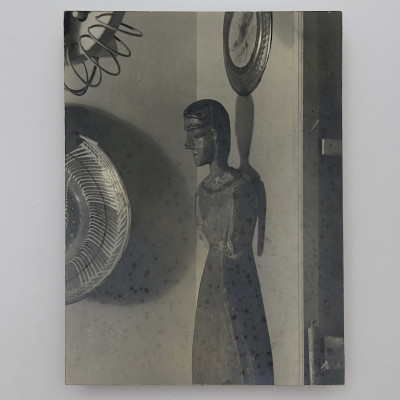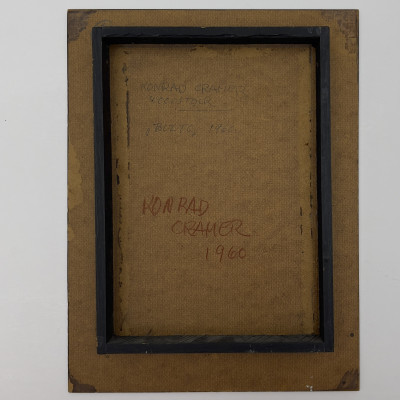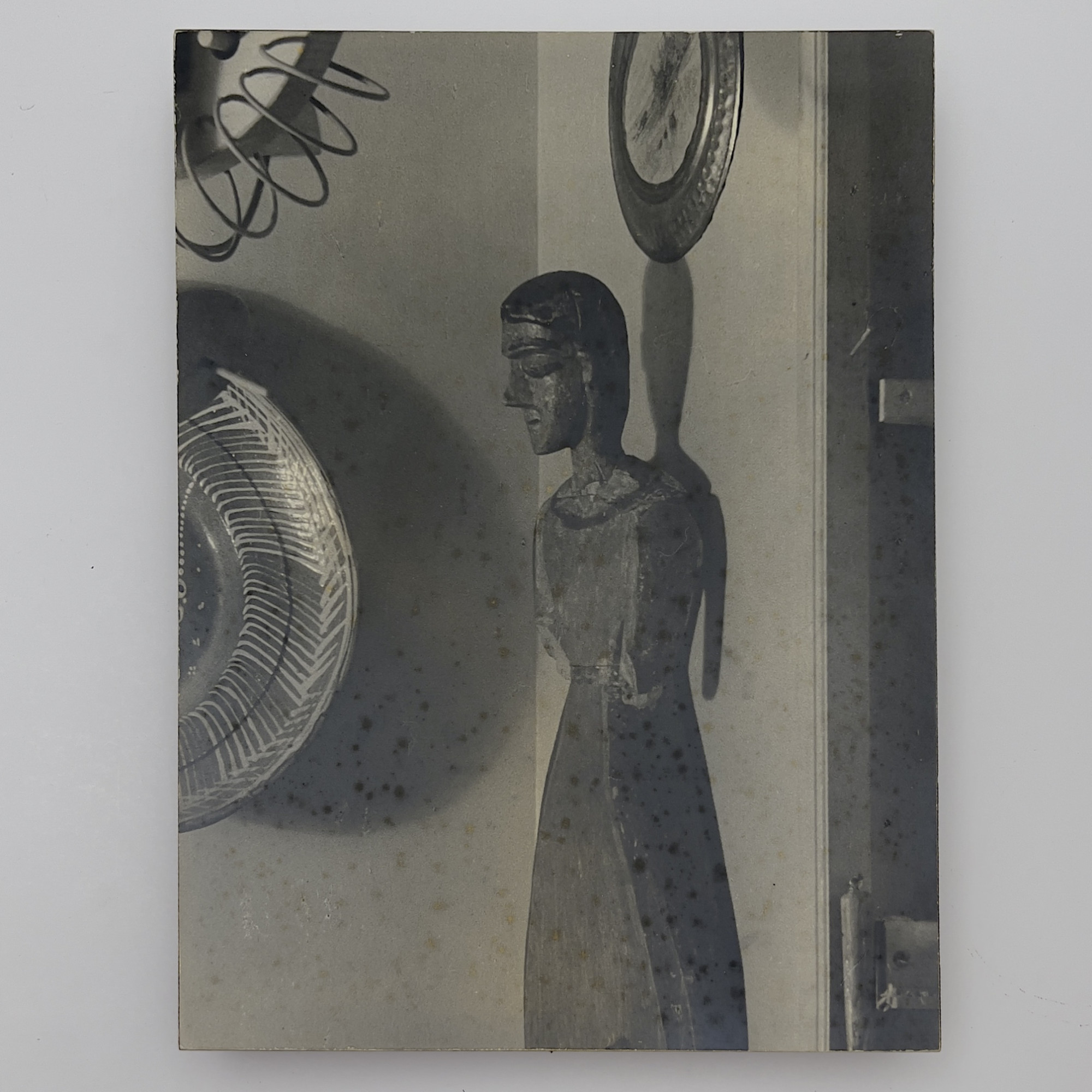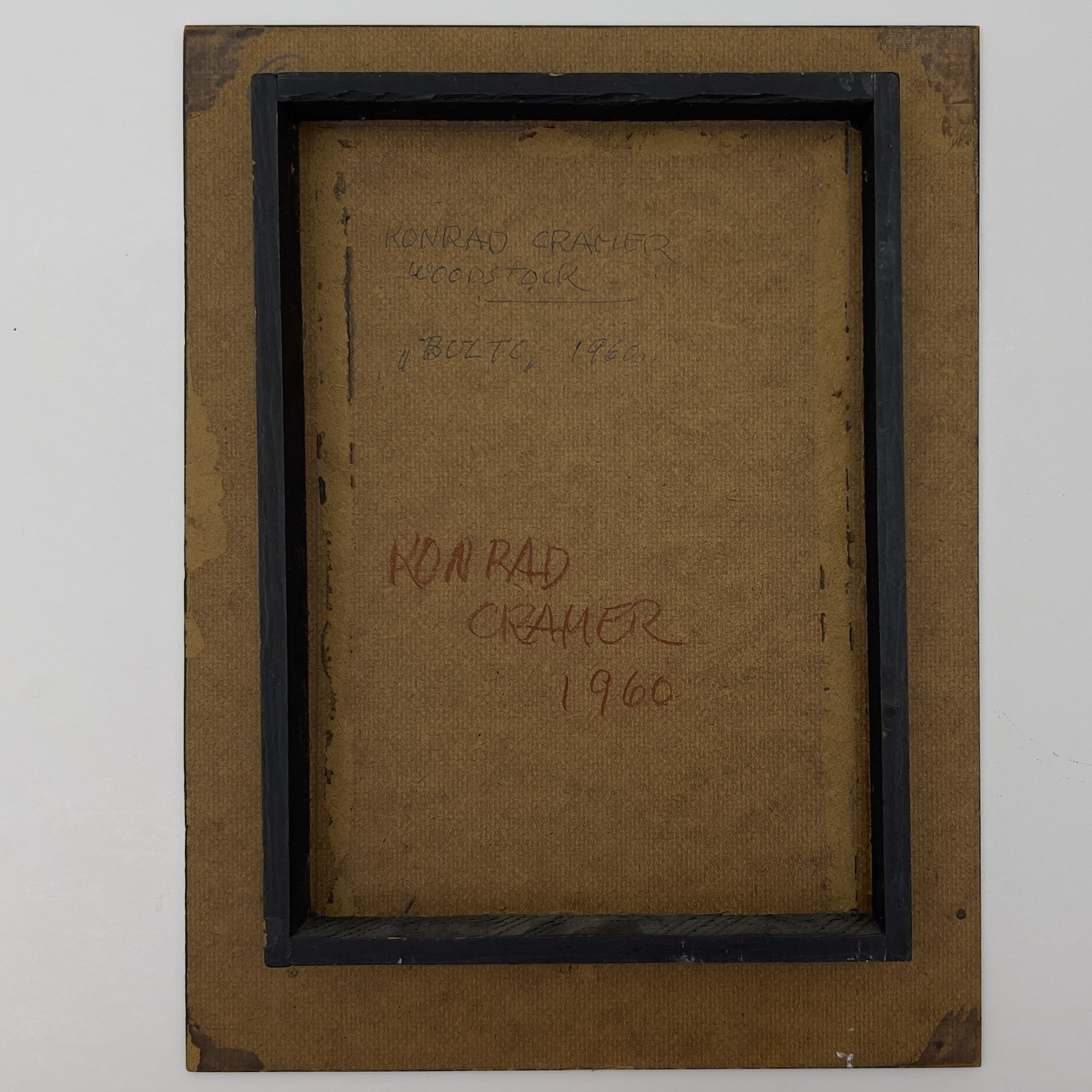
gelatin silver print mounted on masonite
14 x 10 1/4 inches
signed verso
The Eugene and Dorothy Prakapas Estate
good condition, some foxing and discoloration
If you are interested in bidding, please contact us to request more photos, or make an appointment for in-person inspection. To ensure prompt assistance, we recommend reaching out at least 24 hours before the auction by calling 212-353-2277 or emailing us at admin@capsuleauctions.com.
Condition reports are based on visual inspection by the Capsule team under typical office lighting. Unless otherwise noted, items are not examined under UV light in advance of sale. We do not guarantee the content of written or verbal condition reports. Remember, all lots are previously owned and all sales are final. The absence of a condition report does not imply that there are no condition issues with the lot.
Art has not been examined out of the frame unless otherwise stated. Frames, lampshades, or items described as “supplementary” are not considered integral to the value of the lot and are excluded from condition assessments. This includes any mat, mounting, glazing, hanging apparatus, case, box, or stand. Timepiece movements, lighting elements and items with mechanical or electrical components have not been thoroughly tested and are not covered under warranty by Capsule.
unframed

Pioneering gallerists Eugene and Dorothy Prakapas founded Prakapas Gallery at 19 East 71st Street in New York City in 1976. The gallery quickly became known for its bold curatorial vision and diverse programming, presenting new exhibitions every four weeks and maintaining an ever-evolving display of paintings, photographs, and works on paper. Photography, particularly work connected to the Bauhaus, was central to their vision, and the broader theme of European Modernism informed much of their work. Operating with limited resources, the Prakapases sought out overlooked artists and underexplored aspects of major figures’ careers, including favorites such as László Moholy-Nagy, Fernand Léger, Willi Baumeister, Albert Renger-Patzsch, Werner Mantz, and many more.
Before founding the gallery, Gene worked in publishing after graduating from Yale University, served in the Navy, and later attended Oxford as a Fulbright Scholar. Dorothy studied at City University of New York and the Fashion Institute of Technology, and worked in the fashion industry. Together, they built Prakapas Gallery into a destination for collectors seeking the rare and avant-garde—art selected and presented with intelligence, curiosity, and warmth.
Photo: Dorothy and Eugene Prakapas, Prakapas Gallery, 1970s